Introduction
How to write blog posts that rank on Google If you’ve ever published a blog post and waited weeks—only to see no traffic—you’re not alone. Many bloggers experience this frustration, especially in the early stages. You put in the effort, research the topic, write carefully, hit publish, and expect results. But days turn into weeks, and nothing happens. One of the biggest myths in blogging is that good writing automatically ranks. In reality, blog posts rank on Google only when they are written with search intent, proper structure, and SEO strategy in mind.
Google doesn’t rank content simply because it’s well-written or informative. It ranks content that clearly answers a user’s question better than any other available result. This means your blog post must be created for both search engines and real readers. Without understanding how Google evaluates content, even high-quality articles can remain invisible in search results.
Many beginner bloggers believe SEO is complicated or technical, so they ignore it altogether. Others try outdated tricks like keyword stuffing or copying competitor content, which no longer works. In 2025, SEO writing is about clarity, relevance, and usefulness. Google wants content that is easy to understand, well-organized, and aligned with what users are actually searching for.
Another common mistake is writing without a clear plan. Bloggers often choose a topic, start writing immediately, and hope it ranks. But ranking starts before writing. It begins with choosing the right keyword, understanding the intent behind it, and structuring your content in a way that satisfies that intent. Without this foundation, your blog post has little chance of ranking—no matter how good the writing is.
This guide is based on real blogging experience and SEO methods that consistently work today—not outdated tricks or shortcuts. Everything you’ll learn here has been tested in real blogs, across competitive and low-competition niches. The focus is not on gaming the algorithm, but on understanding how Google evaluates content and how users interact with it.
You’ll learn a repeatable process to write blog posts that Google understands and readers love. This process works whether you’re writing your first blog post or trying to improve posts that already exist on your site. It removes confusion and replaces it with a clear step-by-step approach you can follow every time you write.
This method focuses on choosing rankable keywords, matching search intent perfectly, creating SEO-friendly structure, and writing content that keeps readers engaged. When these elements work together, your blog posts become easier to rank and more valuable to users. Over time, this leads to better rankings, higher traffic, and stronger authority in your niche.
If you’re a beginner who feels overwhelmed by SEO, this guide will simplify everything. You don’t need advanced tools, technical knowledge, or years of experience. You just need the right framework and a clear understanding of what Google wants to show in search results.
If you’re already blogging but struggling with low rankings, this guide will help you identify what’s holding your content back. Often, small improvements in structure, intent, and optimization can make a big difference in visibility.
By the end of this guide, you’ll understand exactly how to write blog posts that actually show up on Google and stay there long term. Instead of guessing and hoping for results, you’ll follow a proven system that gives every blog post a real chance to rank. When SEO writing becomes intentional instead of random, blogging becomes far more rewarding—and far more successful.
Step 1 – Choose a Keyword You Can Actually Rank For how to write blog posts that rank on Google
Ranking starts before writing.
What Makes a Rankable Keyword?
Low competition
Clear search intent
Specific (long-tail)
Bad example:
“SEO tips” (too competitive)
Good example:
“SEO tips for beginner bloggers”
Experience-based tip:
New blogs rank faster by targeting keywords with questions or how-to phrases.
Internal link:
Keyword Research for Low Competition
Step 2 – Analyze Top Ranking Posts (Smart Way)
Before writing, study the top 5 results on Google.
Look for:
Content length
Headings used
Questions answered
Gaps you can improve
Mini case example:
If top posts lack examples, add real examples—this often helps outrank them.
Common mistake:
Copying competitors instead of improving them.
Step 3 – Match Search Intent Perfectly
Google ranks posts that solve the exact problem.
Common Search Intent Types:
Informational (“how to…”, “what is…”)
Comparison (“best vs”)
Tutorial (“step-by-step”)
Rule:
If the keyword says how to, your content must be instructional.
Iternal link:
→ Blog Post Writing Tips for Beginners
Step 4 – Create an SEO-Optimized Outline First
Never write without an outline.
Ideal Outline Structure:
Main keyword
Main steps or sections
Details, examples, tips
Why this works:
Structured content improves crawlability and readability.
Internal link:
On-Page SEO Checklist
Step 5 – Write a Strong Introduction (Ranking Booster)
Your introduction should:
Mention the main keyword naturally
Explain the problem
Promise a solution
Avoid:
Long personal stories before explaining the topic.
SEO insight:
A clear intro reduces bounce rate—an indirect ranking factor.
Step 6 – Optimize Headings & Content (Naturally)
Where to Use Keywords:
H1 title
At least one H2
First 100 words
Image alt text
Never:
Force keywords unnaturally.
Humanization tip:
Write like you’re explaining to a friend.
Step 7 – Add Internal Links Strategically
Internal links:
Help Google understand site structure
Increase time on site
Improve rankings
Best Practices:
Link to related posts
Use descriptive anchor text
Don’t overdo it
Internal links:
Internal Linking for SEO
Content Creation Strategy for Blogs
Step 8 – Use External Authority References
External links increase trust.
Good External Sources:
Google Search Central
Moz
Ahrefs
HubSpot
Tip:
Link only when it adds value.
External reference:
Google Search Central Documentation
Step 9 – Update & Improve Old Content
Ranking is not one-time work.
Content Refresh Ideas:
Update stats
Add FAQs
Improve headings
Add internal links
Real-world result:
Updating old posts can double traffic without writing new ones.
Step 10 – Be Patient & Consistent
SEO is long-term.
What to Expect:
Indexing: 1–2 weeks
Initial rankings: 1–3 months
Stable traffic: 3–6 months
Truth:
Most bloggers quit before results appear.
Internal link:
How Long Does SEO Take to Work
FAQ Section
Q1: How long does it take for a blog post to rank?
Usually 1–3 months, depending on competition and SEO.
Q2: Can new blogs rank on Google?
Yes, especially with low-competition keywords.
Q3: Do longer blog posts rank better?
Only if they are helpful and well-structured.
Q4: Is SEO writing different from normal writing?
Yes—SEO writing focuses on intent, structure, and clarity.
Q5: Should I update old blog posts?
Absolutely. Updates often improve rankings.
Image / Infographic Ideas
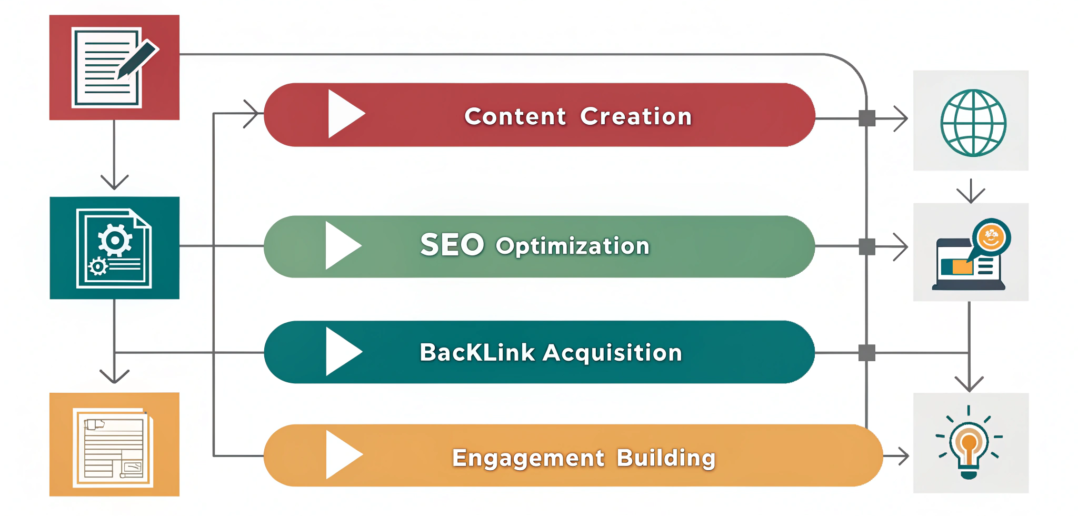
Blog ranking process flowchart
Keyword difficulty comparison
Search intent diagram
Content optimization checklist
Internal Linking Summary
Blog Post Writing Tips for Beginners (That Actually Rank) –
On-Page SEO Checklist for WordPress Websites in 2025 –
External Authority Links
Google Search Central
Moz Beginner SEO Guide