Introduction
Digital Marketing Basics are essential for beginners who want to grow their online presence and achieve measurable results in 2025. With so many channels, tools, and strategies available, it’s easy for newcomers to feel overwhelmed or waste resources on ineffective campaigns.
This guide covers practical digital marketing basics for beginners, focusing on the most important strategies: SEO, social media marketing, email campaigns, content marketing, and analytics. By mastering these fundamentals, you’ll create a cohesive marketing plan, reach your target audience, and track performance to optimize results.
Even if you’re just starting out, following these digital marketing basics will help you make informed decisions, allocate resources wisely, and gradually build a strong online presence.
Step 1 – Understand Digital Marketing Channels Digital Marketing Basics
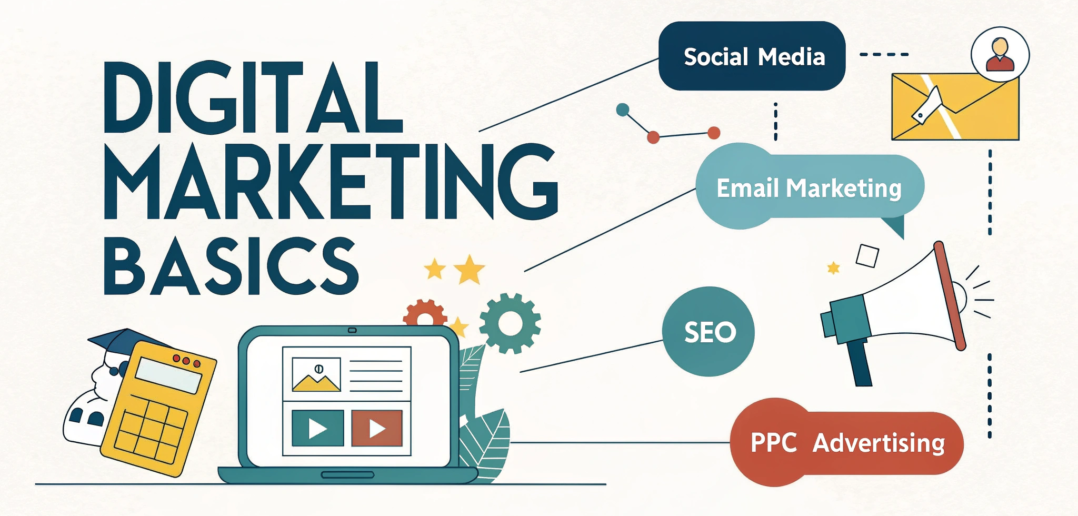
SEO – Optimize your website to rank higher in search engines
Social Media Marketing – Engage and grow audiences on platforms
Email Marketing – Build relationships and drive conversions
Content Marketing – Create valuable content to attract and retain users
Paid Ads – Accelerate traffic and reach
Human insight:
Focusing on 2–3 channels initially is better than spreading thin across all.
Step 2 – Define Your Target Audience
Identify demographics, interests, and behavior
Create buyer personas
Tailor content and campaigns to audience needs
Experience:
Audience research prevents wasted effort and improves campaign effectiveness.
Step 3 – Set Clear Goals & KPIs
Awareness, traffic, leads, conversions, sales
Assign KPIs to each channel
Track performance regularly
Tip:
SMART goals (Specific, Measurable, Achievable, Relevant, Time-bound) make tracking easier.
Step 4 – Content Planning & Creation
Plan topics for blog posts, social media, and emails
Use content calendars
Mix formats: text, video, infographics, podcasts
Internal link:
Blogging & Content Creation Strategies
Human insight:
Repurposing content saves time and maintains consistency.
Step 5 – Launch Campaigns & Track Results
Use tools: Google Analytics, Search Console, Hootsuite
Monitor performance daily/weekly
Adjust campaigns based on data
Experience:
Testing and iterating is key to digital marketing success.
Step 6 – Optimize & Scale

Improve top-performing campaigns
Fix underperforming channels
Increase budget/resources gradually
Tip:
Small, incremental improvements outperform major overhauls.
FAQ Section
Q1: Can beginners do digital marketing themselves?
Yes, with the right tools and step-by-step guidance.
Q2: Which digital marketing channel should I start with?
Focus on the channel where your audience is most active and engaged.
Q3: How much time is needed to see results?
Typically 3–6 months for organic strategies; paid ads yield faster results.
Q4: Do I need expensive tools as a beginner?
No, free tools like Google Analytics, Search Console, and Canva are enough initially.
Q5: How do I measure success in digital marketing?
Track KPIs such as traffic, engagement, leads, and conversions.
Internal Linking Summary
Social Media Marketing Guide for Beginners in 2025 –
Top SEO Tools for 2025: Beginner-Friendly Guide –
External Authority Links
HubSpot Digital Marketing Blog
Neil Patel Blog
Google Digital Garage